
Articles

Every year, millions of students leave their home countries in hopes of receiving better education overseas, bringing along with them diverse perspectives and talents. Despite the opportunities for growth, studying abroad poses several challenges to international students - especially with regards to mental health.

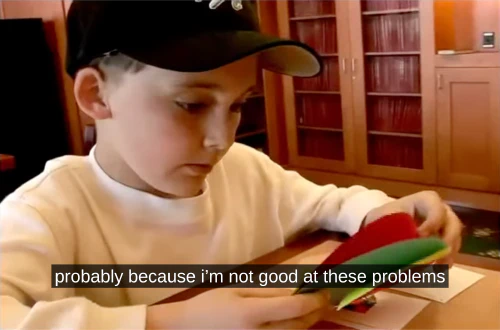
If you listen closely, you'll hear it in classrooms, playgrounds, and dinner tables. A child says, 'I'm just not a sports person' or, 'I'm just not good at writing' as a response to having come 10th place in sports day or failed their English test. There is a deeper reason for why kids develop this mindset early on, and it has everything to do with how we talk about failure.
The world that today’s children are growing up in does not reward obedience the way it used to. It rewards curiosity, adaptability and out-of-the-box thinking. Yet most of our schools still teach the values of the industrial era: sit down, be quiet, follow instructions.

For generations, schools, families, and institutions have conditioned children to obey authority without question. From the moment kids enter classrooms, they learn that the teacher is the ultimate source of knowledge, the rules are fixed, and their role is to comply. But times are changing.

As every parent will confirm, as soon as kids learn to speak they begin to ask questions. And not just any questions – they ask deep, thought provoking questions that even adults do not think of. So where does all this creativity go when we grow up?

For millions of years humanity has strived to predict the unpredictable. We do so much to control and predict everything around us, yet everyday we face things that cannot be controlled or predicted. We are surrounded by chaos.

Thanks to Albert Einstein’s general theory of relativity, we have known that gravitational waves exist for more than a century. It wasn’t until 2015, however, that LIGO physically detected the existence of gravitational waves caused by two colliding black holes 1.3 billion light-years away.